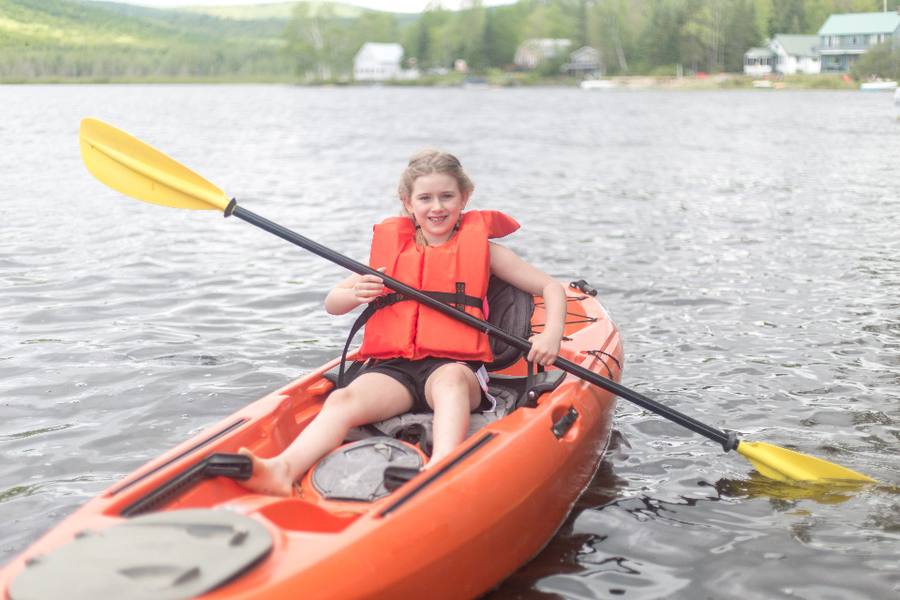
Representative image (stock photo); not the exact product.
Knotted Mesh Damages Fish
Knotted nylon mesh removes the protective slime coating from a fish and can damage fins, scales and eyes as the fish moves in the net.
That slime layer is the fish's defence against infection, and a fish returned without it is considerably more vulnerable.
Rubber and knotless mesh reduce that damage substantially, which is why many fisheries now mandate them and why they have become standard.
Hooks Do Not Tangle In Rubber
Trebles and barbed hooks tangle in knotted nylon in a way that takes minutes to free, all of which is time a fish spends out of water.
Rubber mesh does not grip hooks, and a lure lifts straight out, which shortens handling dramatically.
That practical benefit is frequently what convinces people who were unmoved by the welfare argument, and the outcome is the same either way.
Size And Actually Landing Fish
A net too small forces a fish to be lifted by the line or handled to get it in, which is where both fish and tackle are damaged.
Deep nets hold a fish securely and shallow ones let it flip out, particularly with an active fish near the surface.
Buying a net larger than the fish expected is sensible, since the cost of a larger net is trivial against a lost or damaged fish.
Handle Length For The Situation
Bank fishing from a high bank needs a long handle, and a kayak or a small boat needs a very short one since there is nowhere to swing a long pole.
Telescopic handles cover both and have a joint that can flex or seize, which under the weight of a fish is when it matters.
A net that cannot be deployed one-handed is impractical on a kayak, where the other hand is holding a bent rod.
Drying And Biosecurity
Rubber mesh dries far faster than nylon, which matters for preventing transfer of pathogens and invasive species between waters.
A net stored wet in a bag smells and degrades, and rubber lasts considerably longer when dried.
Cleaning and drying nets between different waters is standard biosecurity practice and is a genuine responsibility rather than a formality.
Unhooking mats and cradles belong alongside a net for anything large that will be laid down, since a fish on grass or gravel is damaged by contact and by any thrashing. Wetting a mat before use stops it stripping slime, and a dry mat does more harm than the bank would. For big fish a cradle that keeps the fish supported and in a little water is considerably better again.
Folding handles and collapsible frames make a large net transportable, and the hinge is where a net fails under the weight of the fish it was bought for.
Net depth is easy to underestimate, and a shallow net lets a fish flip out at exactly the moment it is lifted clear of the water and least controllable.
The Verdict
A clear improvement over knotted nylon for both fish welfare and practicality, where size and handle length matter most.
Undersized nets cause the damage they should prevent, telescopic joints fail under load, and wet storage degrades mesh.
Rubber mesh, sized larger than you expect. It protects the fish and your lure lifts straight out.
At a glance
Pros
- Preserves the protective slime layer
- Hooks lift out instead of tangling
- Dries fast for biosecurity
- Required at many modern fisheries
Cons
- Heavier than nylon when wet
- Bulkier to store and carry
- Telescopic handles flex and seize
- Undersized nets damage fish and tackle
Frequently asked questions
Does mesh type really matter?
Yes. Knotted nylon strips the protective slime coating and damages fins, scales and eyes, and that slime is the fish's defence against infection. Rubber and knotless mesh reduce that substantially, which is why many fisheries mandate them.
What size should I buy?
Larger and deeper than you expect. A net too small means lifting a fish by the line or handling it to get it in, which is where both fish and tackle get damaged. A larger net costs very little by comparison.
What handle length?
Long for high banks, very short for a kayak or small boat where there is nowhere to swing a pole and the other hand holds a bent rod. Telescopic covers both and adds a joint that can flex or seize under load.
Specifications
| Type | Knotless rubber mesh landing net |
| Welfare benefit | Protects slime, fins and scales |
| Practical benefit | Hooks do not tangle |
| Sizing | Larger than the fish expected |
| Depth | Deep enough that fish cannot flip out |
| Bank fishing | Long handle |
| Kayak or boat | Short, one-handed deployment |
| Care | Dry between waters |
The bottom line
Better for the fish and faster for you. Buy it bigger and deeper than you think you need.
Check Price on Amazon